Stormwater • Drainage • Gutters • Roofing Serving Fairfield County CT & Westchester NY

Property Drainage Guide

French Drain vs. Dry Well: Which Is Right for Your Property?

French drains and dry wells solve different parts of a drainage problem. A French drain collects and redirects unwanted groundwater, while a dry well receives stormwater and provides underground storage and infiltration where site conditions permit.

In some drainage systems, both can work together. Choosing the right approach starts with understanding where the water comes from, how it moves across the property and where it can appropriately go.

Quick Answer

What Is the Difference Between a French Drain and a Dry Well?

French Drain

Collects groundwater or subsurface water and redirects it away from a problem area.

Dry Well

Receives collected stormwater, stores it underground and allows infiltration where conditions are appropriate.

The key distinction is simple: a French drain primarily collects and transports water, while a dry well primarily provides a destination for collected water.

Side-by-Side Comparison

French Drain vs. Dry Well

FRENCH DRAIN

Collects & Redirects Water

A French drain commonly uses perforated drainage pipe in a stone-filled trench to intercept unwanted subsurface water.

  • Helps manage groundwater
  • Can address persistently soggy areas
  • Intercepts water moving through soil
  • Redirects collected water
  • Needs an appropriate discharge or destination
DRY WELL

Stores & Infiltrates Water

A dry well receives collected stormwater and provides underground storage while water infiltrates into surrounding soil where conditions allow.

  • Provides underground storage
  • Can receive roof runoff
  • Can connect to drainage piping
  • Depends on soil and site conditions
  • Can be part of a larger stormwater system
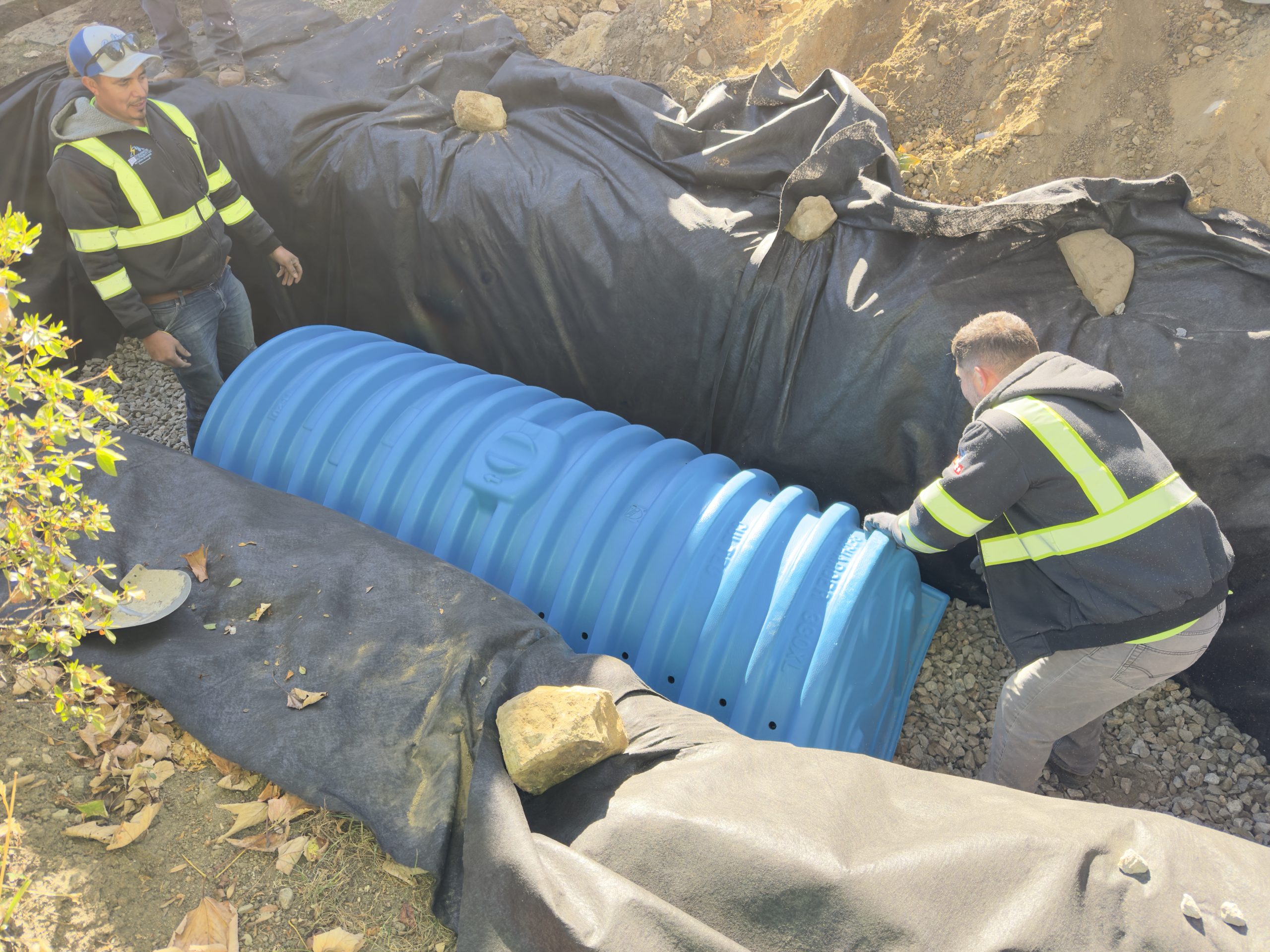
French drain installation showing drainage pipe and stone

French drain installation designed to collect and redirect unwanted water.

French Drain Applications

When Does a French Drain Make Sense?

A French drain may be appropriate when groundwater or subsurface water repeatedly saturates a particular area.

Soggy Lawn Areas Parts of the lawn remain saturated after surrounding areas have dried.
Water Near Foundations Subsurface water repeatedly collects in soil near the home.
Hillside Water Water moves through the ground from higher portions of the property.
Persistent Wet Areas A particular section of the property remains wet despite otherwise normal conditions.
Underground Infiltration

When Does a Dry Well Make Sense?

A dry well can be useful when stormwater has already been collected and an appropriate underground storage and infiltration location is needed.

Water from downspouts, catch basins or other drainage components may be directed to an underground system. The design depends on the volume of water, available space, elevations, soil conditions and other property-specific factors.

Roof Runoff Downspouts collect stormwater from the roof and need an appropriate destination.
Collected Surface Water Catch basins or other drainage components collect water that must be managed.
Underground Storage Stormwater can be temporarily stored below grade as part of an appropriate design.
Larger Drainage Systems Underground infiltration may form one component of a broader stormwater system.
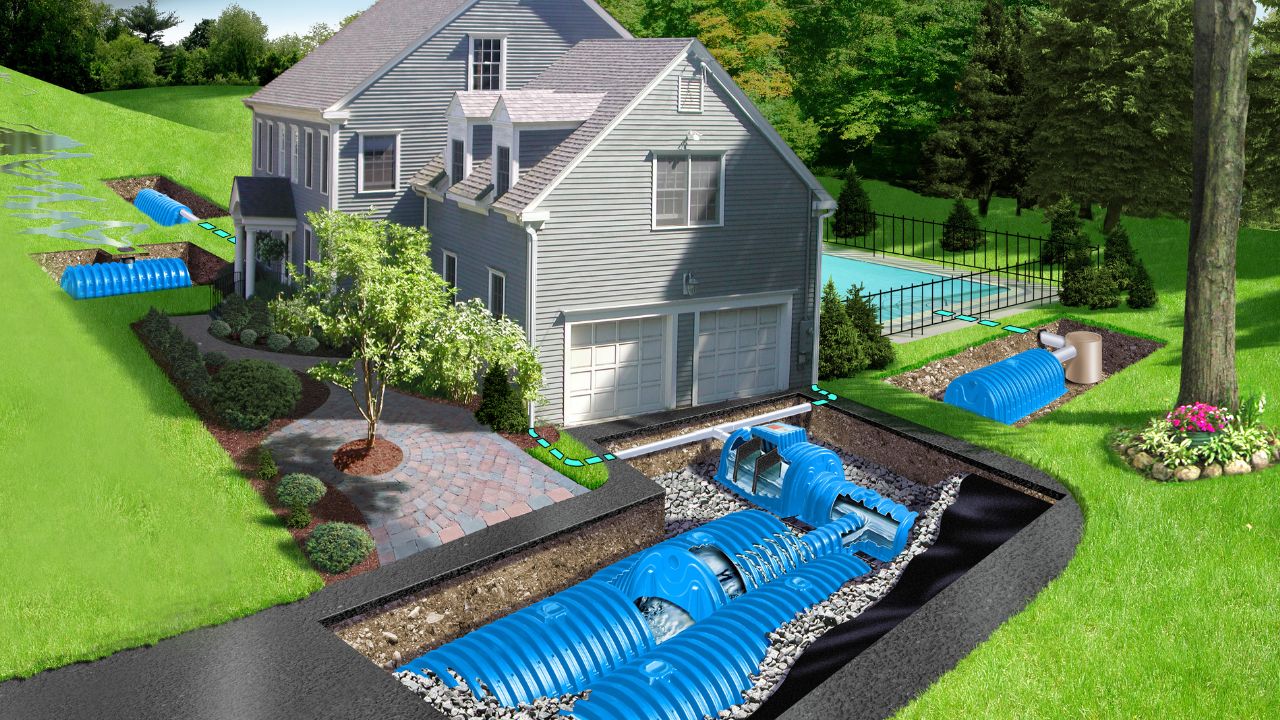
Underground stormwater infiltration system installation

Underground stormwater systems can provide storage and infiltration as part of a property-specific drainage design.

System Design

Can a French Drain and a Dry Well Work Together?

Yes. In some drainage designs, the two systems perform different jobs within the same overall drainage plan.

01 Water creates a problem

Groundwater or subsurface water saturates part of the property.

02 French drain collects it

The drainage trench intercepts the unwanted water.

03 Pipe redirects it

Collected water is transported away from the problem area.

04 The water is managed

An appropriate outlet or infiltration system receives the water.

Larger Stormwater Systems

Where Does a CULTEC System Fit In?

Larger stormwater volumes may require more underground storage than a small conventional dry well can provide.

CULTEC stormwater chambers can be incorporated into underground stormwater storage and infiltration systems. Depending on the property and system design, water collected from roof drainage, catch basins or other drainage components may be directed toward an appropriately designed chamber system.

Heneghan Services installs CULTEC systems as part of residential stormwater and drainage projects where site conditions and system requirements call for them.

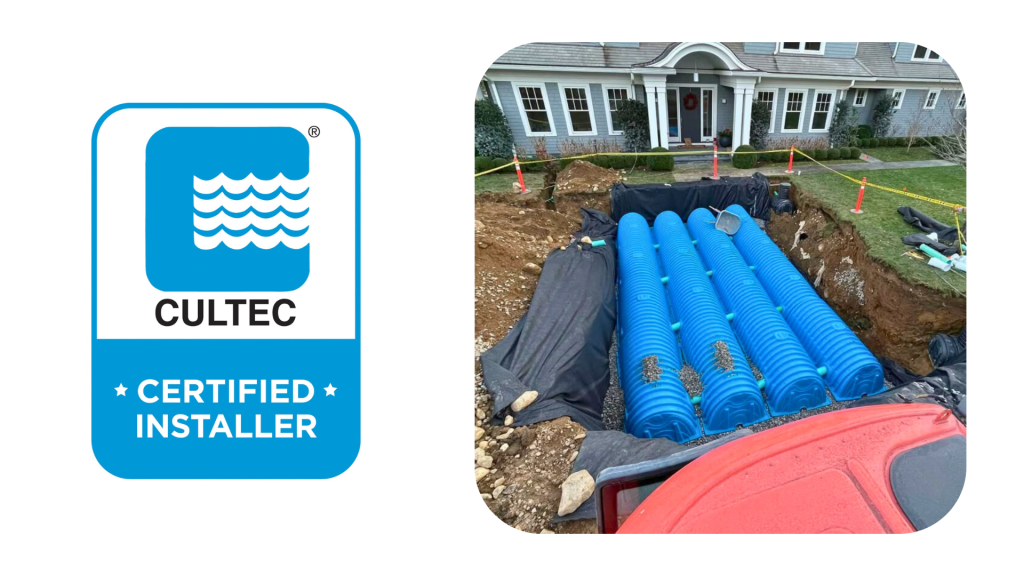
CULTEC underground stormwater chamber installation

Underground chamber systems can provide additional stormwater storage where the project requires greater capacity.

Choosing a Drainage System

How Do You Know Which System Your Property Needs?

Start with the water problem rather than choosing a drainage product first.

01

Where Is the Water Coming From?

Determine whether you're dealing with groundwater, roof runoff, surface runoff or another source.

02

Where Is It Collecting?

A wet lawn, foundation area, driveway and low point can require different approaches.

03

Where Can the Water Go?

A drainage system needs an appropriate destination for the water it collects.

04

What Are the Soil Conditions?

Soil conditions affect how readily water can infiltrate and whether infiltration is appropriate.

05

How Much Water Is Involved?

Drainage area and stormwater volume influence the required capacity of a system.

06

What Is Already Installed?

Existing downspouts, catch basins, sump pumps and drainage pipes should be considered.

Project Cost

Does a French Drain or Dry Well Cost More?

There isn't a universal answer because these systems perform different functions and installation conditions vary from property to property.

French drain costs can be affected by trench length, excavation depth, access, drainage pipe, stone, disposal and restoration. Dry-well costs can depend on storage requirements, excavation, system type, piping, access, soil conditions and restoration.

Choosing the system comes before comparing price. A drainage component that doesn't address the actual source and destination of the water may leave the original problem unresolved.
Fairfield County CT & Westchester NY

Drainage Design Starts With the Property

Two nearby homes can experience similar water problems and still require different drainage solutions.

Elevation, soil, roof area, landscaping, retaining walls, existing drainage and the natural direction of water movement can all affect system design.

Heneghan Services evaluates drainage and stormwater problems throughout Fairfield County, Connecticut and Westchester County, New York.

Common Questions

French Drain vs. Dry Well FAQs

Is a French drain the same as a dry well?

No. A French drain generally collects and redirects groundwater or subsurface water. A dry well generally provides underground storage and infiltration for collected stormwater.

Can a French drain empty into a dry well?

In some drainage designs, collected water can be directed toward an underground infiltration system. Whether that is appropriate depends on site conditions, soil, elevation, water volume and overall system design.

Which is better for a soggy yard?

It depends on why the yard is wet. If groundwater is saturating the area, a French drain may be considered. If collected stormwater needs underground storage, a dry well or another infiltration system may be appropriate.

Can a dry well handle downspout water?

Dry wells and other infiltration systems can be used for roof runoff where site conditions and system design are appropriate.

Do all wet yards need a French drain?

No. Standing water can result from grading, roof runoff, groundwater, existing drainage problems and other conditions. The cause should be identified before choosing the solution.

When would a CULTEC system be considered?

Underground chamber systems may be considered when a drainage design requires greater stormwater storage or infiltration capacity. The appropriate system depends on project and site requirements.

Heneghan Services

Not Sure Which Drainage System You Need?

Start by identifying the water problem. Heneghan Services can evaluate the property and determine which drainage approach is appropriate for the site.