Why Does My Yard Stay Wet After It Rains?
A yard that stays wet for days after a storm is usually a sign that water is collecting faster than the property can drain, absorb or redirect it.
Poor grading, groundwater, roof runoff, low areas and slow-draining soil can all contribute to standing water and persistently soggy lawns.
Why Does a Yard Stay Wet After Rain?
Water is entering the area faster than it can leave.
The cause may be surface runoff, groundwater, poor grading, roof drainage, low areas or soil that absorbs water slowly. Finding the source of the water is the first step toward determining the appropriate drainage solution.
What Causes a Soggy or Wet Yard?
Poor Grading
Improper slopes can cause stormwater to collect in low sections instead of moving away from the property.
Groundwater
Water moving through saturated soil can keep sections of a lawn wet long after surface runoff disappears.
Downspout Runoff
Gutters collect rainfall from a large roof area and downspouts can concentrate that water into one small area.
Slow-Draining Soil
Some soil conditions allow water to infiltrate much more slowly than others.
Low Areas
Water naturally follows elevation and can repeatedly collect in the lowest section of a property.
Drainage System Problems
Existing pipes, drains or basins may be clogged, damaged or unable to handle the amount of stormwater reaching them.
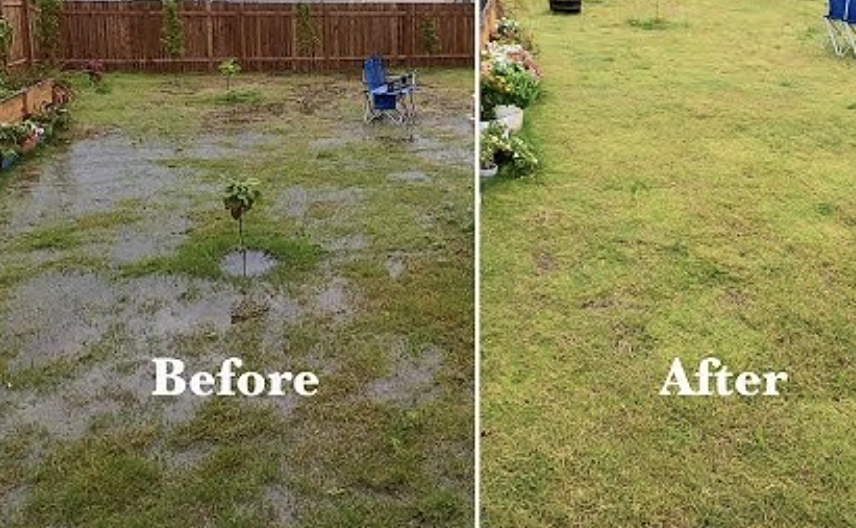
Standing water can be caused by surface runoff, groundwater, grading, roof drainage or a combination of conditions.
How Do You Determine What Is Causing a Wet Yard?
The right place to start is with the water — not with a specific drainage product.
Determine whether the water comes from rainfall, roof runoff, groundwater or another area of the property.
Identify how water moves across the surface and through the surrounding soil.
Low areas and surrounding grades can explain why water repeatedly collects in one location.
Determine where collected stormwater can appropriately be redirected, stored or infiltrated.
What Type of Drainage System Can Fix a Wet Yard?
Different drainage systems solve different water problems. Some properties require one system, while others require several components working together.
French Drains
French drains can intercept unwanted groundwater or subsurface water and redirect it away from problem areas.
Catch Basins
Catch basins collect surface runoff at low points and direct the water into drainage piping.
Dry Wells
Dry wells can receive collected stormwater and provide underground storage and infiltration where site conditions allow.
Downspout Drainage
Underground piping can move concentrated roof runoff away from areas where it repeatedly saturates the soil.
Yard Drainage Systems
Multiple drains, basins and pipes can work together when a property has several sources of water.
CULTEC Stormwater Systems
Underground stormwater chambers can provide additional storage and infiltration capacity for larger drainage systems.
A properly designed French drain can intercept subsurface water before it continues into a problem area.
Does Every Wet Yard Need a French Drain?
No. A French drain is useful for certain types of water problems, but it is not automatically the correct solution for every wet lawn.
A French drain is generally used to intercept subsurface water moving through saturated soil. A catch basin is generally designed to collect water moving across the surface.
A property can also have both problems at the same time, which is why identifying how the water reaches the wet area matters.
Can Downspouts Cause a Wet Yard?
Yes. A drainage problem in the yard can sometimes begin with water collected on the roof.
A roof collects a significant amount of rainfall and sends it into the gutter system. Downspouts then concentrate that water into relatively small discharge areas.
When a downspout repeatedly empties beside a foundation or into a low section of lawn, the surrounding soil can remain saturated. Underground downspout drainage can move that water to a more appropriate location when site conditions allow.
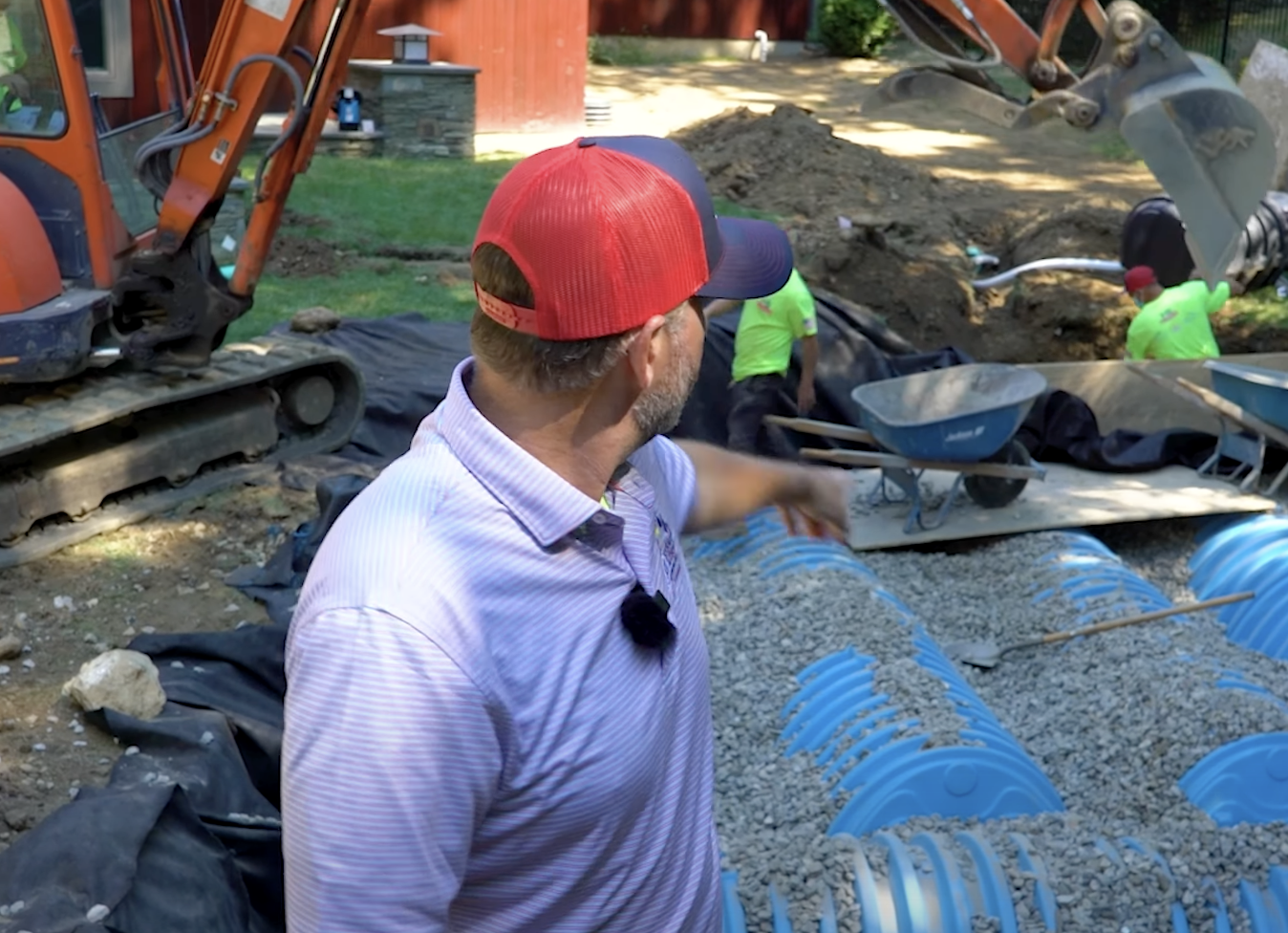
Larger stormwater problems may require multiple drainage components working as one system.
What If the Property Has Too Much Water for a Simple Drain?
Larger stormwater problems may require more than a French drain or catch basin.
French drains, catch basins, downspout drainage and underground piping can sometimes work together to collect and transport water.
When additional underground stormwater storage or infiltration is required, a drainage design may incorporate CULTEC stormwater chambers where appropriate for the property.
Every Property Has a Different Drainage Problem
Two properties can have similar standing water but require very different drainage designs. Property elevation, soil conditions, roof runoff, landscaping, retaining walls, neighboring properties and existing drainage all affect how stormwater moves.
Heneghan Services evaluates and installs residential drainage and stormwater systems throughout Fairfield County, Connecticut and Westchester County, New York.
Service areas include Greenwich, Old Greenwich, Riverside, Cos Cob, Stamford, Darien, New Canaan and surrounding communities.
Common Questions About Yard Drainage
Why does my backyard stay wet for days after rain?
Common causes include groundwater, poor grading, slow draining soil, low areas, concentrated roof runoff and drainage systems that are not moving water effectively.
Will a French drain fix a soggy yard?
A French drain can help when subsurface water or groundwater is contributing to the wet area. Surface-water problems may require a different type of drainage system.
What is the difference between a French drain and a catch basin?
A French drain generally intercepts water moving through saturated soil, while a catch basin collects water flowing across the ground surface.
Can gutter downspouts cause standing water?
Yes. Downspouts concentrate rainfall collected from the roof and can repeatedly discharge large amounts of water into one small section of the property.
Will a dry well fix a wet yard?
A dry well can provide underground storage and infiltration for collected stormwater where site conditions are appropriate. The water must first be collected and conveyed to the dry well.
What is the best drainage system for a wet yard?
There is no single system that is appropriate for every property. The solution depends on the source of the water, property elevations, soil conditions, water volume and where collected water can appropriately be managed.
Can French drains, catch basins and dry wells work together?
Yes. Different drainage components can be combined when a property requires systems for collecting, transporting, storing and infiltrating stormwater.
Who installs yard drainage systems in Greenwich, CT?
Heneghan Services provides residential drainage and stormwater evaluation and installation in Greenwich and communities throughout Fairfield County, Connecticut and Westchester County, New York.
Find Out Why Your Yard Is Staying Wet
The right drainage solution starts by identifying where the water comes from, how it moves through the property and where it can appropriately go.