How to Fix Standing Water in Your Yard
Fixing standing water starts with determining where the water is coming from, how it moves across the property and where it can safely be redirected, stored or infiltrated.
Depending on the cause, a drainage solution may include a French drain, catch basin, underground downspout drainage, dry well, yard drainage system or underground stormwater chambers.
How Do You Fix Standing Water in a Yard?
First identify the source of the water.
Surface runoff may require a catch basin or grading solution. Groundwater may require a French drain. Roof runoff may need underground downspout drainage. When collected stormwater has nowhere to discharge, a dry well or underground stormwater infiltration system may be appropriate depending on site conditions.
Where Is the Standing Water Coming From?
Standing water is the symptom. The source of the water determines which drainage approach should be considered.
Water Flows Across the Lawn
Surface runoff may collect in a low point during storms. Catch basins, drainage piping or grading may be considered depending on the property.
Ground Stays Saturated
Persistent saturation can indicate groundwater or subsurface water. A French drain may be used to intercept and redirect this water.
Water Collects Near Downspouts
Roof runoff can overwhelm a small section of lawn. Underground downspout drainage can transport the water away from the discharge area.
Water Has Nowhere to Go
Some properties need underground storage or infiltration. Dry wells or larger stormwater systems may be appropriate depending on soil and site conditions.
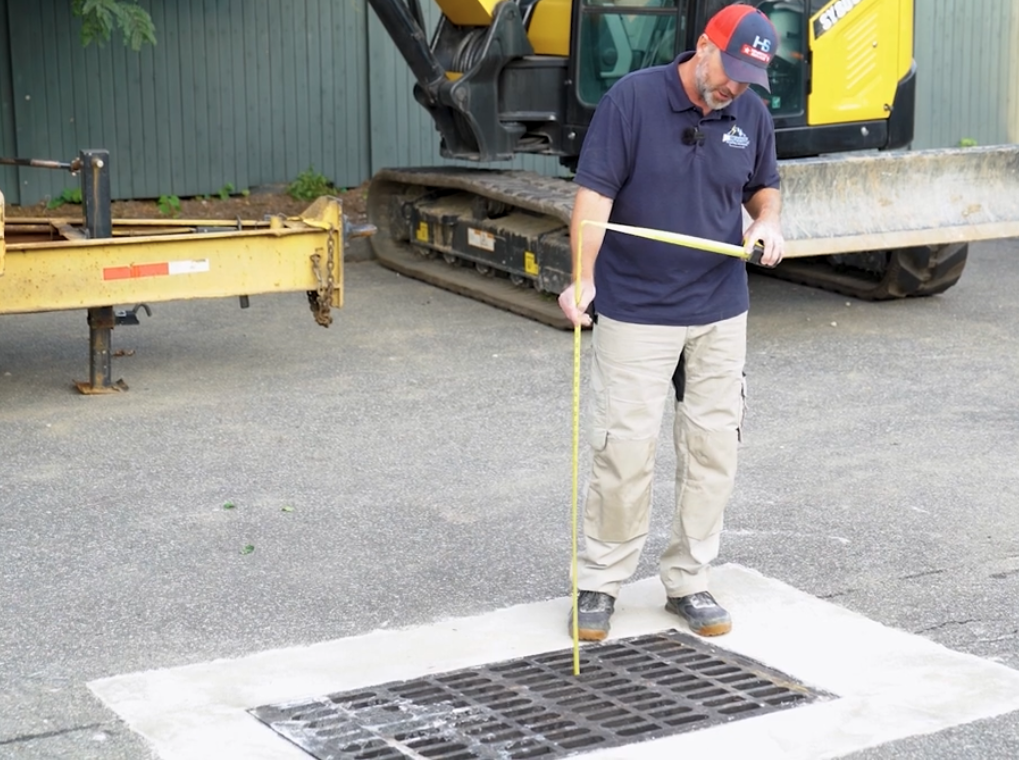
Standing water is often the visible result of a larger drainage, grading, groundwater or stormwater problem.
When Does a Wet Yard Need a French Drain?
A French drain is generally used to intercept unwanted water moving through saturated soil.
A typical French drain uses a perforated drainage pipe surrounded by stone and drainage fabric. Water enters the drainage zone and is carried toward an appropriate outlet or drainage system.
French drains can be useful along chronically wet sections of a property, near slopes or in areas affected by subsurface water. They are not automatically the correct solution for every puddle.
When Does Standing Water Need a Catch Basin?
Catch basins are designed to collect water flowing across the surface of the property.
When rainfall travels across a driveway, patio, lawn or landscaped area and repeatedly collects at a low point, a properly positioned catch basin can capture that water.
Drainage piping then carries the collected stormwater toward an appropriate discharge, storage or infiltration location.
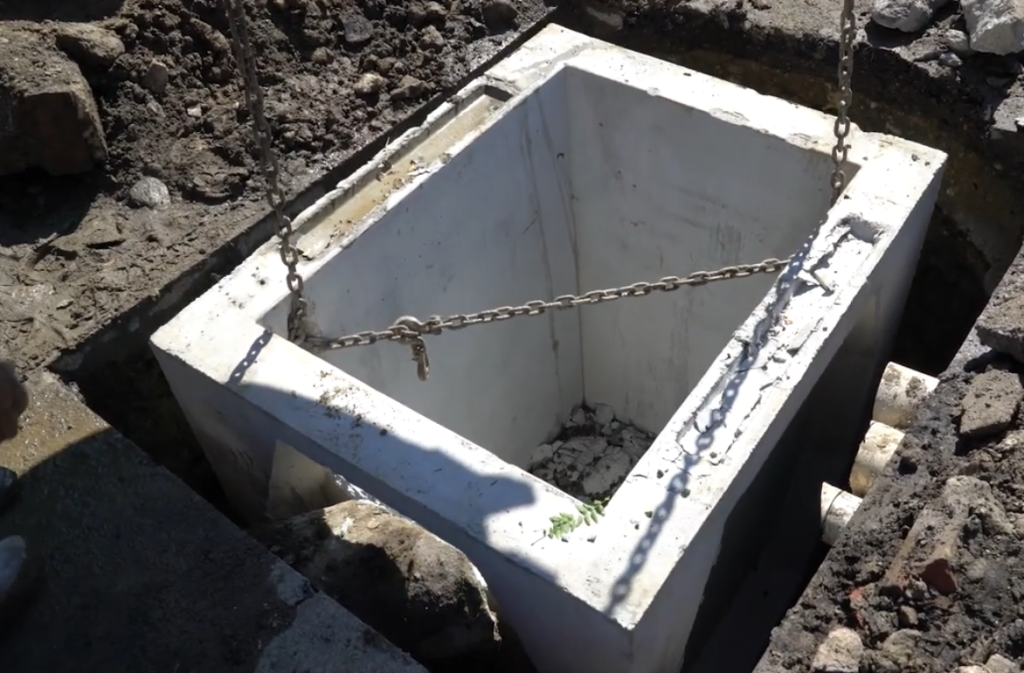
Drainage systems should be designed around how water actually moves through the property.
Can Downspouts Cause Standing Water in the Yard?
Yes. Roof runoff can send a large volume of stormwater into a surprisingly small section of the property.
Gutters collect rainfall across the roof and direct it into the downspouts. If those downspouts discharge directly beside the house or into a poorly draining section of lawn, the same area can become saturated during every significant storm.
Underground downspout drainage can carry this water away from the foundation and lawn to an appropriate drainage destination.
What If There Is Nowhere for the Water to Go?
Collecting stormwater is only part of the drainage problem. The collected water also needs an appropriate destination.
Depending on the property and site conditions, a dry well may provide underground storage and infiltration for collected stormwater.
Properties requiring greater underground capacity may use CULTEC stormwater chambers as part of a larger system incorporating drainage piping, catch basins, downspout drainage or other collection methods.

Underground stormwater systems can provide storage and infiltration when collected water cannot simply be discharged elsewhere.
Common Solutions for Standing Water
French Drain
Used to intercept groundwater or subsurface water moving through saturated soil.
Catch Basin
Collects surface runoff at low points and directs it into drainage piping.
Downspout Drainage
Moves concentrated roof runoff away from foundations and chronically wet lawn areas.
Dry Well
Provides underground storage and infiltration for collected stormwater where conditions are appropriate.
CULTEC Stormwater System
Provides greater underground stormwater storage and infiltration capacity for larger drainage designs.
Combination Drainage System
French drains, basins, piping, downspout drainage and underground storage can work together when a property has multiple drainage problems.
Standing Water Solutions in Fairfield County CT & Westchester County NY
Heneghan Services evaluates and installs residential drainage and stormwater systems throughout Fairfield County, Connecticut and Westchester County, New York.
Fairfield County, Connecticut
Service areas include Greenwich, Old Greenwich, Riverside, Cos Cob, Stamford, Darien, New Canaan and surrounding Fairfield County communities.
Westchester County, New York
Heneghan Services also provides drainage and stormwater solutions for residential properties throughout neighboring Westchester County, New York.
Why Does the Right Drainage Solution Depend on the Property?
Standing water can look similar from one property to another while having completely different causes.
Property elevations, slopes, roof area, soil conditions, retaining walls, driveways, landscaping, neighboring runoff and existing drainage systems can all affect how stormwater moves through a site.
That is why a drainage system should be designed around the actual water problem rather than choosing a French drain, dry well or catch basin before determining where the water originates.
Frequently Asked Questions About Standing Water
What is the best way to fix standing water in a yard?
The appropriate solution depends on the source of the water. Surface runoff may require catch basins or grading, groundwater may require a French drain, roof runoff may require underground downspout drainage, and collected stormwater may require a dry well or underground infiltration system.
Will a French drain remove standing water?
A French drain can help when groundwater or subsurface water is contributing to the wet area. It is not necessarily the correct solution when the problem is primarily surface runoff.
What type of drain is best for a low spot in a yard?
When surface water naturally flows toward a low point, a catch basin may be used to collect that runoff and connect it to a drainage system. Site conditions determine whether this is appropriate.
Can a dry well fix standing water?
A dry well can provide underground storage and infiltration for collected stormwater when soil and site conditions are suitable. A collection and conveyance system is still needed to bring water to the dry well.
Why does water collect near my house after rain?
Water near a house may result from grading, roof runoff, downspout discharge, groundwater or surrounding surface runoff. The source should be identified before choosing a drainage solution.
Can gutters cause standing water in my yard?
Yes. Gutters collect rainfall from the roof and concentrate it into downspouts. If the downspouts discharge into a poorly draining area, they can contribute significantly to standing water and saturated soil.
Who installs yard drainage systems in Greenwich, CT?
Heneghan Services evaluates and installs residential drainage and stormwater systems in Greenwich, Connecticut and throughout Fairfield County, CT and Westchester County, NY.
What drainage systems does Heneghan Services install?
Heneghan Services installs drainage and stormwater solutions including French drains, catch basins, yard drainage, underground downspout drainage, dry wells, drainage piping and CULTEC stormwater systems depending on property conditions.
Stop Guessing Where the Water Is Coming From
A drainage evaluation can identify how water reaches the problem area and which type of drainage or stormwater system may be appropriate for the property.